Building for Scale: Philippine Hotel Giant Brings Fresh Perspectives to the 9th Hospitality Philippines Conference

As Megaworld Global Hotels & Resorts (MGHR) builds toward a larger hospitality portfolio by 2032, the focus is not simply on adding more hotels and rooms, but on strengthening the capabilities needed to grow well. At the 9th Hospitality Philippines Conference held September 9–10, 2026, in Manila, three MGHR leaders shared perspectives on what that growth will increasingly require: stronger partnerships, smarter operating structures, and a deeper understanding of what guests value.
Building Beyond Homegrown Brands
As MGHR expands its portfolio, the group is also preparing to work across a wider mix of hotel brands, partners, owners, and markets.
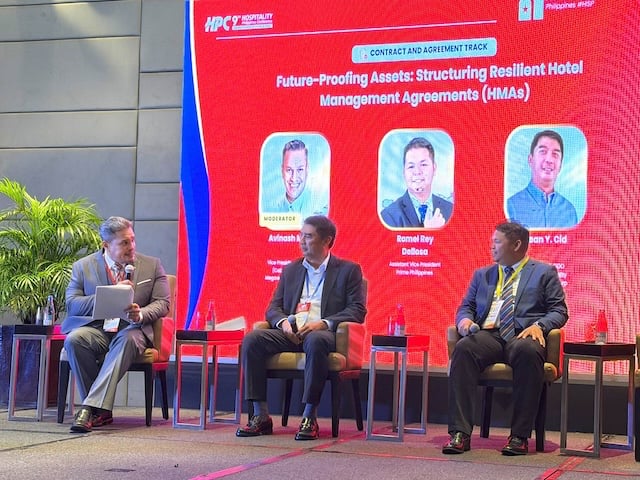
Avinash Menon, Vice President for Operations, moderated the session Future-Proofing Assets: Structuring Resilient Hotel Management Agreements, where he discussed how hotel management agreements can provide the right balance of structure, accountability, and flexibility between owners and operators.
“Resilience in a hotel management agreement (HMA) is not about predicting every disruption—it is about creating a framework that can respond when change comes,” Menon said.
He highlighted the importance of clear performance benchmarks, transparent reporting, disciplined cost and capital controls, and alignment between owners and operators.
“A strong HMA protects long-term asset value through clear performance benchmarks, transparent reporting, disciplined cost and capital controls, and sufficient flexibility for owners and operators to adapt as markets, guest expectations, and operating realities evolve,” he added.
The discussion is increasingly relevant as MGHR moves from a portfolio built largely around its homegrown hotel brands toward a broader hospitality platform that will also include more global brands and external partnerships.
For MGHR, building scale means not only expanding geographically, but also developing stronger relationships and management frameworks that can support different brands, owners, and hotel concepts over the long term.
Building The Structures Behind The Experience
Expansion also brings a different challenge: making sure the systems supporting each hotel can grow as efficiently as the physical portfolio itself.
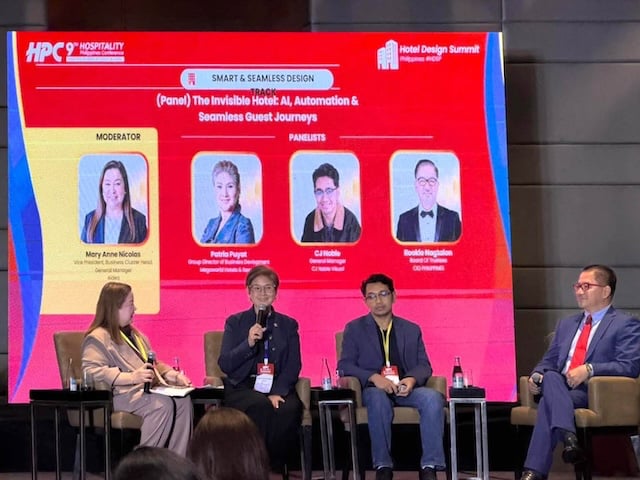
Patria Puyat, Vice President for Business Development, joined the panel The Invisible Hotel: AI, Automation & Seamless Guest Journeys, where she discussed how technology can help make hospitality more intuitive, personalized, and seamless.
“We have always been moving towards hospitality that is more intuitive, personalized and seamless, with the help of technology quietly removing friction and bottlenecks from the guest journey,” Puyat said.
For Puyat, however, a smarter hotel is not defined by visible technology alone.
“What should never change is the human connection at the heart of hospitality or the feeling of being welcomed, understood and genuinely cared for. MGHR is leveraging innovation to create more meaningful guest experiences while preserving what makes hospitality human,” she added.
As MGHR develops more hotels, these “invisible” structures will become increasingly important—whether through systems that improve efficiency and decision-making or through people who consistently deliver thoughtful, personal service.
For the group, the goal is not simply to build more spaces, but to make those spaces work better, feel more seamless, and remain memorable to the guest.
Turning Guest Feedback Into Brand Value
Ultimately, the success of growth is measured by how guests experience it.
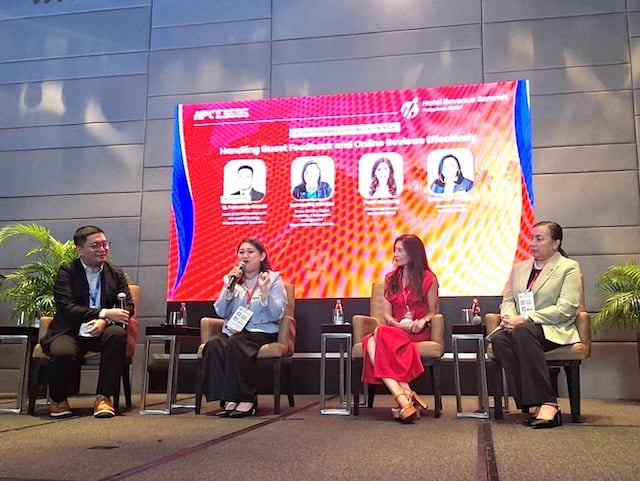
Samantha Manuel, Group Director of Digital Marketing and Reputation Management, joined the panel Handling Guest Feedback and Online Reviews Effectively, where she discussed the growing relationship between guest feedback, public reputation, and booking confidence.
“Every guest experience contributes to a hotel’s public reputation, making it essential to listen, respond, and act on guest feedback in ways that build trust,” Manuel said.
For Manuel, feedback goes beyond measuring individual experiences. It also provides insight into what guests increasingly expect and value from hotel brands.
“We see feedback not simply as a measure of performance, but as an opportunity to continuously learn, improve, and strengthen the guest relationship. Being future-ready means looking beyond what guests are saying today, anticipating evolving expectations, turning insights into meaningful improvements, and consistently elevating the experience,” she added.
As MGHR grows across more destinations, brands, and guest segments, understanding these signals will become increasingly important in strengthening brand equity and maintaining confidence across the portfolio.
Building More, And Building Right
MGHR is working toward a portfolio of close to 12,000 hotel rooms by 2032, with growth expected across both homegrown and global hospitality brands.
That expansion will require more than new developments. It will require stronger partnerships to support a broader portfolio, efficient systems that can operate at scale, and closer attention to the experiences guests value and celebrate.
The perspectives shared by Menon, Puyat, and Manuel at this year’s Hospitality Philippines Conference reflect those priorities.
For MGHR, the road to 2032 is not simply about building more hotels. It is about building the relationships, systems, and experiences that will allow the group to grow well—and ensuring that each new development strengthens the business and the guest experience behind it.